


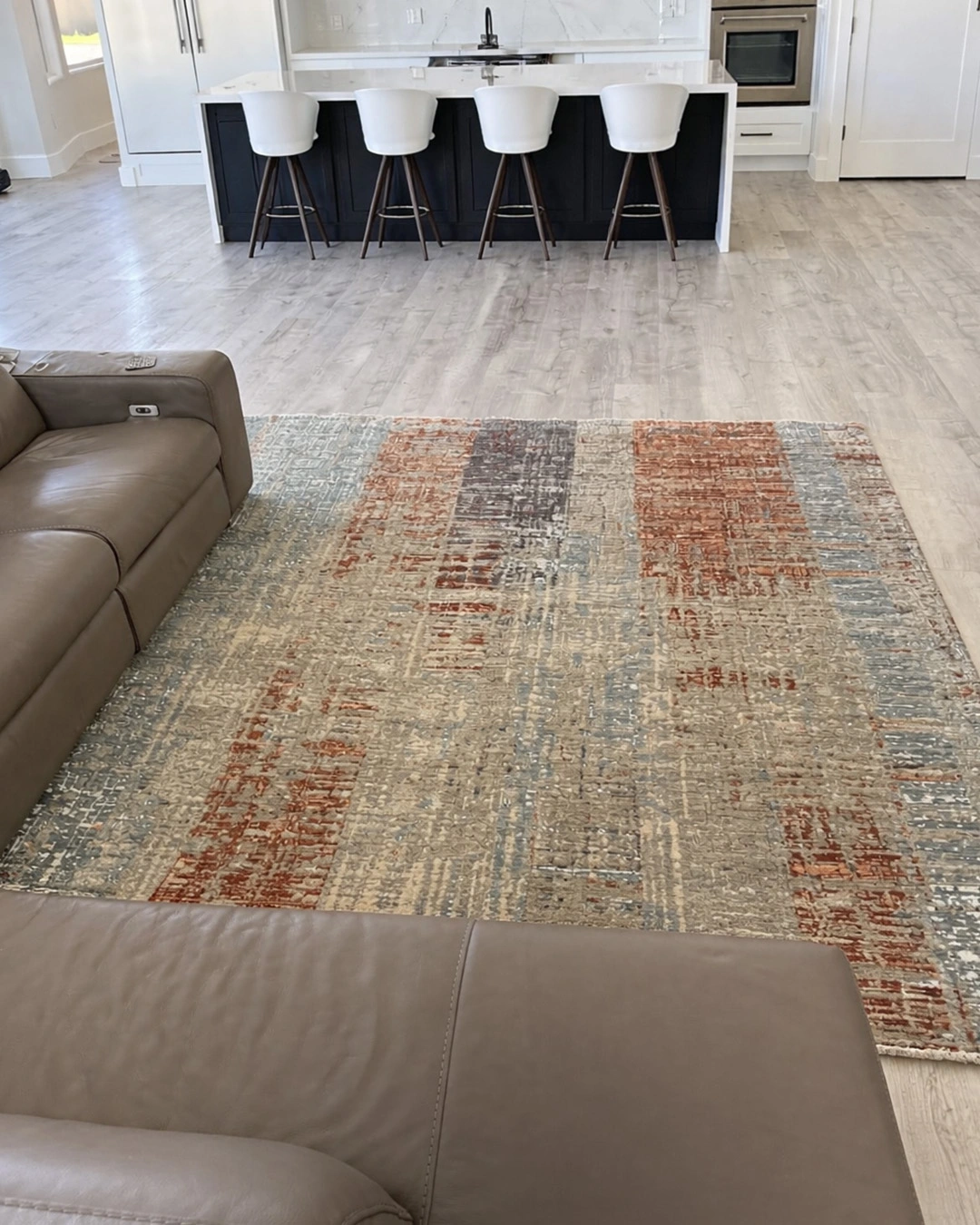
The best area rug materials for durability are wool, nylon, and polypropylene. Wool resists stains, crushing, and fading naturally, making it the top choice for high-traffic homes. Nylon offers similar toughness at a lower cost, while polypropylene works well for sunny rooms and outdoor spaces because it resists moisture and UV rays a real advantage in Scottsdale’s dry, sun-heavy climate.
Key Points
- Wool is the most durable natural fiber, lasting 15–25 years with proper care.
- Nylon is the most stain- and wear-resistant synthetic, ideal for busy households.
- Polypropylene (olefin) resists sun fading and moisture, making it well-suited to Scottsdale’s intense UV exposure and dry heat.
- Jute and sisal add natural texture but wear faster in high-traffic or sunny rooms.
- Arizona’s low humidity and strong sun mean fiber choice matters more here than in milder climates — synthetic and wool blends often outperform pure natural fibers in direct sunlight.
Why Rug Material Matters More in Scottsdale’s Climate
Scottsdale sees over 300 days of sunshine a year and summer humidity levels that can drop below 10%. That combination is tough on rugs. Natural fibers like jute and cotton can dry out and become brittle, while direct sun exposure through large windows or patio doors fades color faster than in cloudier regions. Homeowners in Scottsdale, Paradise Valley, Cave Creek, and Fountain Hills often find that a rug rated for “average” conditions elsewhere wears out faster locally simply because of the sun and dryness. Choosing a fiber built for heat and light exposure isn’t just a preference here — it’s practical.
What Are the Most Popular Area Rug Materials?
Most area rugs on the market today are made from one of six core materials, each with distinct strengths.
Wool
Wool is a natural, renewable fiber prized for softness, resilience, and natural stain resistance thanks to its lanolin coating. It bounces back from foot traffic and furniture indentations better than almost any other material, and high-quality wool rugs commonly last two decades or more with regular care.
Nylon
Nylon is a synthetic fiber engineered for strength. It resists abrasion, holds color well, and is often treated for stain resistance, which makes it a favorite for family rooms, hallways, and homes with pets or kids.
Polypropylene (Olefin)
Polypropylene is moisture- and mildew-resistant and holds up well against fading, which makes it a smart pick for sunrooms, patios, and homes with a lot of natural light — a common feature in Scottsdale’s desert-modern architecture. It’s also budget-friendly.
Polyester
Polyester rugs are known for vivid color and softness underfoot, often at a lower price point than wool. They’re less resilient than nylon under heavy furniture but perform well in moderate-traffic living areas and bedrooms.
Jute and Sisal
These plant-based fibers bring natural texture and an earthy look. They’re biodegradable and eco-friendly but absorb moisture and can wear out faster in direct sun or humid conditions, so they work best in low-traffic, shaded rooms.
Cotton
Cotton rugs are lightweight, easy to wash, and affordable, commonly used as flat-weave accent or kitchen rugs. They’re less durable than wool or nylon and tend to show wear in high-traffic zones.
Which Rug Material Lasts the Longest?
Wool consistently ranks as the longest-lasting natural fiber, while nylon leads among synthetics. The table below breaks down how common materials compare on the factors that matter most for long-term use.
| Material | Average Lifespan | Sun/Fade Resistance | Stain Resistance | Best For |
| Wool | 15–25 years | Good | Very Good | Living rooms, bedrooms |
| Nylon | 10–20 years | Good | Very Good | High-traffic areas, families with pets |
| Polypropylene | 5–10 years | Very Good | Good | Sunrooms, patios, entryways |
| Polyester | 5–10 years | Fair | Good | Moderate-traffic, decorative spaces |
| Jute/Sisal | 3–7 years | Fair | Fair | Low-traffic, shaded rooms |
| Cotton | 3–5 years | Fair | Fair | Kitchens, accent areas |
Lifespan estimates reflect typical residential use and manufacturer care guidelines; actual longevity varies based on foot traffic, sun exposure, and maintenance routine. Consumer flooring associations and fiber manufacturers, such as the Carpet and Rug Institute, publish similar comparative data for reference.
How to Choose the Right Rug Material for Your Home
- Identify the room’s traffic level. Entryways and living rooms need wool or nylon; bedrooms and formal spaces can use softer, less durable fibers.
- Consider sun exposure. Rooms with large west- or south-facing windows — common in Scottsdale homes — benefit from polypropylene or wool blends that resist UV fading.
- Factor in pets and kids. Nylon and wool handle spills and heavy play best; jute and cotton stain more easily.
- Check the local climate fit. Arizona’s dryness makes moisture-loving natural fibers like jute more prone to cracking, so pairing them with a humidifier or limiting them to shaded rooms helps.
- Set a maintenance expectation. Wool needs professional cleaning every 12–18 months; synthetics are generally more forgiving between cleanings.
Best Rug Materials for Local Scottsdale-Area Homes
Homeowners across Scottsdale, Phoenix, Tempe, Paradise Valley, Cave Creek, and Fountain Hills deal with shared conditions: high UV index, low humidity, and fine desert dust that settles into fibers. For sun-facing rooms or homes near open desert landscapes, polypropylene and wool-nylon blends tend to outperform pure natural fibers. For interior rooms with less direct light, wool remains the most durable all-around choice. Local rug retailers and flooring specialists in the area typically recommend rotating rugs seasonally in high-sun rooms to reduce uneven fading, a tip worth following for anyone shopping for a rug store near me in Scottsdale or nearby towns.
At the end
Choosing among the best area rug materials comes down to matching fiber strengths to your room’s traffic, sunlight, and climate conditions. Wool and nylon lead in overall durability, while polypropylene holds up best in Scottsdale’s sun-drenched interiors. If you’re furnishing a home in Scottsdale, Paradise Valley, or Fountain Hills, picking the right material upfront saves money and hassle down the road. If you’re ready to compare options in person, visiting a local rug specialist can help you find the best fit for your space and budget.
FAQs:
What is the most durable material for an area rug? Wool is widely considered the most durable natural material, while nylon is the most durable synthetic. Both resist crushing, staining, and heavy foot traffic significantly better than cotton or jute.
Which rug material is best for sunny rooms? Polypropylene (olefin) holds up best in direct sunlight because it resists UV fading and moisture better than wool, cotton, or jute, making it a strong choice for sunrooms and patios.
Are wool rugs good for Arizona’s dry climate? Yes. Wool naturally regulates moisture and resists cracking better than plant-based fibers like jute, which can dry out and become brittle in low-humidity conditions.
How long do area rugs typically last? Well-maintained wool and nylon rugs often last 15 to 25 years, while polyester, polypropylene, jute, and cotton rugs generally last 3 to 10 years depending on traffic and care.
What’s the difference between natural and synthetic rug fibers? Natural fibers like wool, jute, and cotton are biodegradable and offer distinct textures, while synthetic fibers like nylon and polypropylene are engineered for stain resistance, durability, and lower cost.
Where can I find area rugs near Scottsdale, AZ? Local flooring and home goods retailers throughout Scottsdale, Tempe, and Paradise Valley typically carry a range of wool, nylon, and polypropylene rugs suited to the region’s sun exposure and dry climate.


